


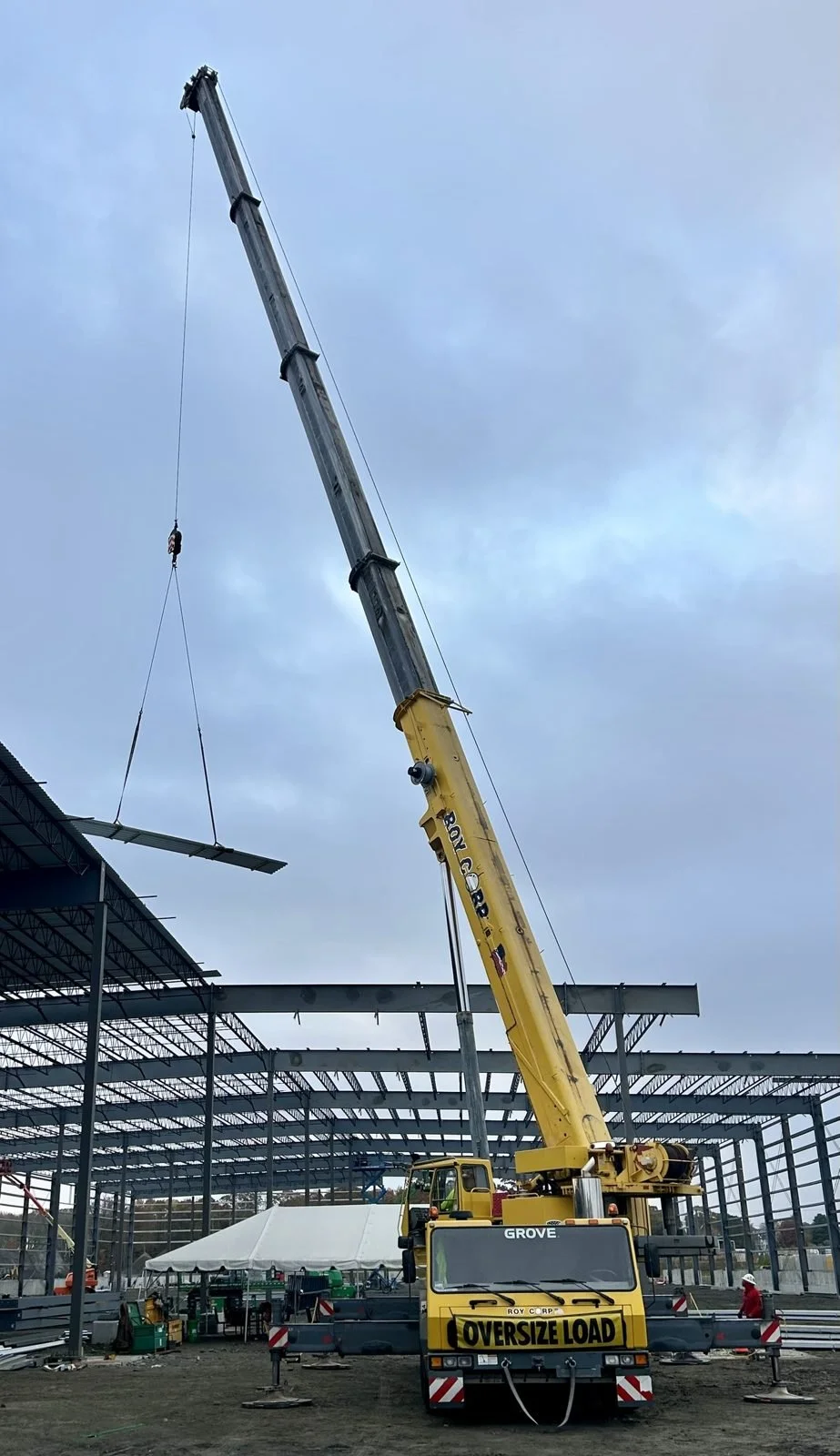
When is a qualified rigger required?
What OSHA and ASME B30.5 require on crane jobs, and what a qualified rigger is responsible for on your site.
OSHA Rules
Employers must use qualified riggers during hoisting activities for assembly and disassembly work (1926.1404(r)(1)). Additionally, qualified riggers are required whenever workers are within the fall zone and hooking, unhooking, or guiding a load, or doing the initial connection of a load to a component or structure (1926.1425(c)).
OSHA Fact SheetWho can be a qualified rigger?
A qualified rigger is a rigger who meets the criteria for a qualified person. Employers must determine whether a person is qualified to perform specific rigging tasks. Each qualified rigger may have different credentials or experience. A qualified rigger is a person that:
The person designated as the qualified rigger must have the ability to properly rig the load for a particular job.
ASME B30.5: Rigger Responsibilities
The current ASME B30.5 standard, released in 2021, requires at least one qualified rigger whenever a mobile crane is being used, regardless of industry. The standard further defines “qualified” as requiring evidence of satisfactorily passing both written and practical exams.
Chapter 5-3 of ASME B30.5 states that riggers at a load-handling activity are, at a minimum, responsible for:
Need a qualified rigger on your job?
Roy Corp provides nationally certified operators and riggers on every lift.